
Arrest Warrants in Marion County
Marion County Magistrate Court handles arrest and search warrant requests, with a Magistrate Judge sitting as a neutral judge of the sworn facts. Probable cause is the test. It asks whether the facts support a reasonable belief that an offense happened and that the named person committed it. Law enforcement can bring a request to a Magistrate Judge at any time, per the county's own court description. Private citizens follow a different track during normal hours. Marion County requires the requestor to file a police report first, then submit a written request with enough identifying detail for law enforcement to enter any issued warrant into GCIC. Unless the matter is urgent, the accused usually gets notice of a weekly pre-warrant hearing. From there the judge may issue the warrant, decline it, or take another path.
Marion Probable-Cause Path
The local process keeps accusation, judicial review, and service separate. That separation is why a police report alone is never a Marion County arrest warrant. Only the judge's finding turns it into one.
- A law-enforcement officer presents sworn facts, or a private requestor first reports the event to police and follows the written process.
- A neutral Magistrate Judge considers whether probable cause supports an arrest warrant.
- If the judge issues the order, Marion County says it is forwarded to the Sheriff for execution.
- After custody, Magistrate Court may conduct first appearance and consider bond, while the case proceeds toward the District Attorney and the proper trial court.
The Marion County Probate and Chief Magistrate page is the key local source. Its payment link is not a warrant search. Nor does the process description there expose private warrant applications as any online roster.
What an Arrest Warrant Contains
Marion County publishes no public sample arrest warrant, so treat any form number floating around online as unverified. When a real record is available, ask the clerk which fields appear. Also ask whether any part is sealed, redacted, or tied to a pending investigation.
| Warrant identifier | The court’s identifier, if public; no verified Marion format is published. |
|---|---|
| Named subject | The person the judicial order authorizes officers to arrest. |
| Alleged offense | The charge or conduct tied to the probable-cause finding. |
| Issuing court | The judge and court with authority over the warrant. |
| Issue date | When the judge signed the judicial order. |
| Bond information | Terms only if the court has set and released them; Marion publishes no bond schedule. |
| Status | Whether the custodian reports the order as active, served, recalled, or otherwise disposed. |
Never place a real person's name, date of birth, address, or case number in a public request example. Marion County keeps such requests private. Use official agency channels for any real filing.
Marion Sheriff Verification Comes First
The Marion County Sheriff's Office serves criminal warrants it receives from courts and other agencies, and its public number is (229) 649-3841. The sheriff posts no public active-warrant roster, no warrant form, and no searchable portal, so a phone call comes first, which matches Georgia's own guidance. Ask what details the office needs, whether it will discuss a person's own status by phone, whether government identification is required, and where any in-person step happens. Skip any non-government domain linked from an older county sheriff page, since it now shows unrelated content. The Marion County government page and the Georgia Sheriffs' Association directory are the trusted routes.
Safety: An in-person check may result in immediate custody, so call first and seek legal advice before traveling to a sheriff, courthouse, or jail.
How Arrest Warrants Are Served
Once issued, an arrest warrant in Marion County goes to the Sheriff for execution. The Sheriff's Office calls criminal-warrant service an operational duty, planning for high-risk warrants and setting priorities based on threats. None of that creates a public ranking. It promises no service date and discloses no tactics, which is also why some details stay outside a public record response. Service puts the person in custody, and booking, first appearance, bond, and trial come later. Those stages are not the warrant. The Magistrate Court conducts first appearances and considers bond in many cases, and Marion County treats bond as a way to assure attendance rather than punishment. The county publishes no bond schedule, bond-window hours, release timetable, or accepted jail payment methods, so confirm those facts for the case at hand.
Marion Jail Data Is Not Warrants
The state directory lists Marion County Jail at 338 Geneva Road along with the sheriff's phone number. The Georgia Sheriffs' Association directory has used 388 Geneva Road instead. Neither explains the gap. Call before you drive.
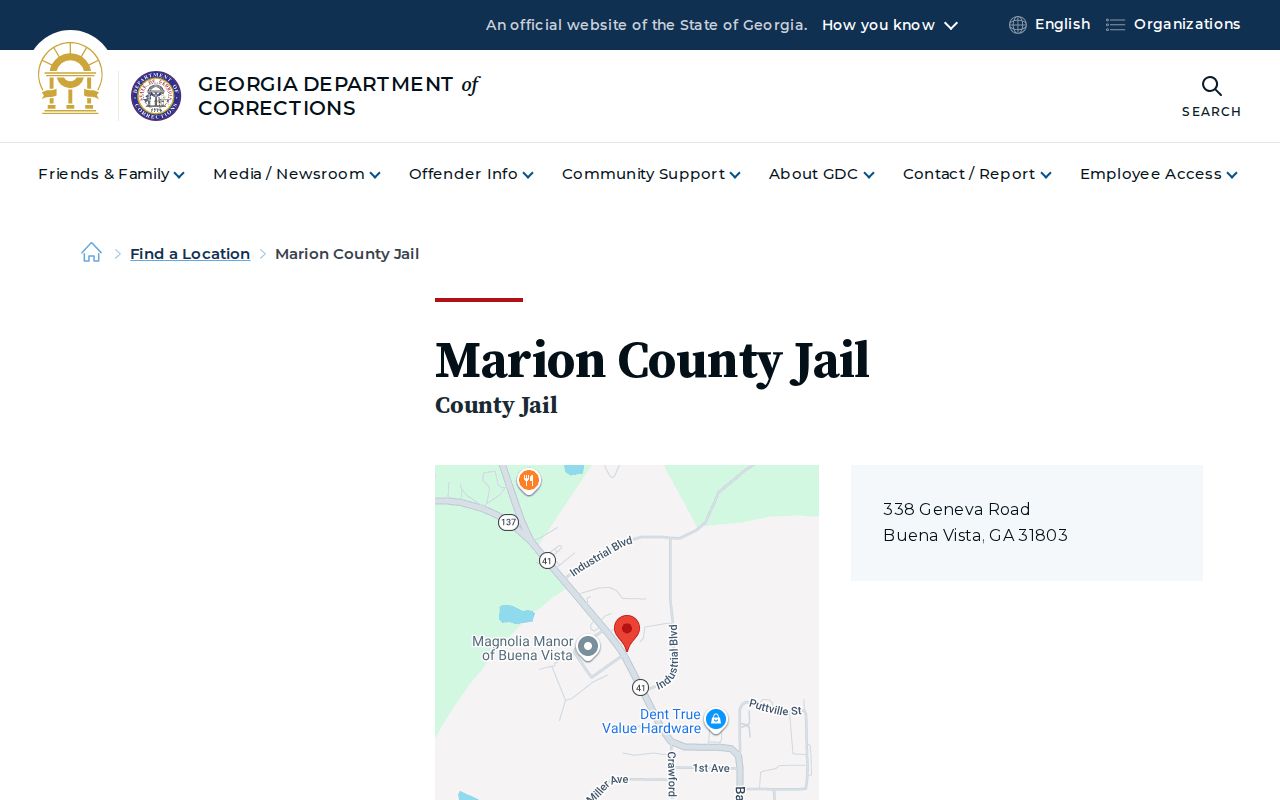
The official listing identifies a facility and a contact route, nothing more. It does not verify anyone's Marion County arrest warrant. A separate August 2026 sheriff report listed 15 inmates, 30 beds, and 11 people awaiting trial. Those are aggregate jail figures for one period. They are not a warrant count, a booking search, or proof about any person, since a warrant can exist without a booking and a booking may involve a warrant from another agency.
Arrest Warrant vs Summons vs Bench Warrant
Each paper calls for a different response. Let the issuing document and the Marion County court behind it guide the next step, not a broad web search.
| Instrument | Basis | Immediate effect | Response focus |
|---|---|---|---|
| Arrest warrant | Judicial probable cause | Authorizes custody | Attorney, planned surrender, first appearance, and bond |
| Summons or notice | Direction to appear | Sets a court obligation without present arrest authority | Appear as instructed and confirm the docket |
| Bench warrant | Missed duty in an existing case | Authorizes custody to return the matter to court | Issuing-court procedure and possible recall motion |
A summons can turn into a warrant if the required appearance is missed. The summons itself is not an arrest warrant. Missed settings are covered in the Marion County bench warrant reference.
Marion Arrest Warrant Access Limits
Georgia's Open Records Act opens a lot of doors, but a live public warrant list is not one of them. The Attorney General's guidance spells out what stays closed: confidential sources, surveillance details, prosecution strategy, and pending investigative material. Juvenile records get their own shield under O.C.G.A. § 15-11-708(b). A custodian still has choices. He or she can release the parts that can be separated, black out protected details, withhold a record under a cited exemption, or simply state that the compilation you asked for does not exist. So ask narrow. Request the current warrant-verification procedure, blank forms, the proper custodian, or a non-identifying aggregate report that already exists. Marion County's Open Records form covers inspection or copies and wants a detailed description. It promises a response or a timetable within three business days. What Marion County will not do is build a brand-new warrant roster just because someone requested one.
What to Do If There's a Warrant for You
Take an unverified report seriously, but check it through an official source first. Never approach officers during warrant service, and never send someone else to interfere. A lawyer can contact the court and the Marion County sheriff, weigh whether voluntary surrender makes sense, and prepare you for the first appearance and the bond question. Recall is not automatic. Only the court that issued the warrant can recall or quash its own order.
- Call the Marion County Sheriff or identified issuing court. Ask for the present self-verification procedure and what information is required.
- Speak with a criminal-defense lawyer before appearing in person. Share court papers privately, not through a public post or form example.
- Through counsel, confirm the warrant, alleged charge, issuing court, surrender route, and whether bond has been set.
- Arrange a voluntary appearance or surrender when advised. Follow the official location and timing instructions for that case.
- Attend first appearance and comply with bond or release terms. Later confirm the court record rather than relying on a payment receipt or web result.
Marion County runs no safe-surrender event, warrant amnesty day, or walk-in recall counter. No current bond schedule is posted either, with nothing dated September 2026 on any office page. So call the issuing court or clerk and ask what applies to your warrant.
Marion Superior Court Handoff
An arrest-warrant case in Marion County ultimately lands with the District Attorney, per the county. Superior Court in the Chattahoochee Judicial Circuit holds felony jurisdiction. Joy Smith's office keeps the Marion Superior and Juvenile filings. The clerk can tell you where an existing filing belongs, though not confirm every Magistrate, municipal, or federal warrant, and never give legal advice. The official circuit source lists Marion among six circuit counties.
The circuit page maps the state court structure, not a person-level warrant search. The Victim-Witness location page offers another official Marion County courthouse reference.
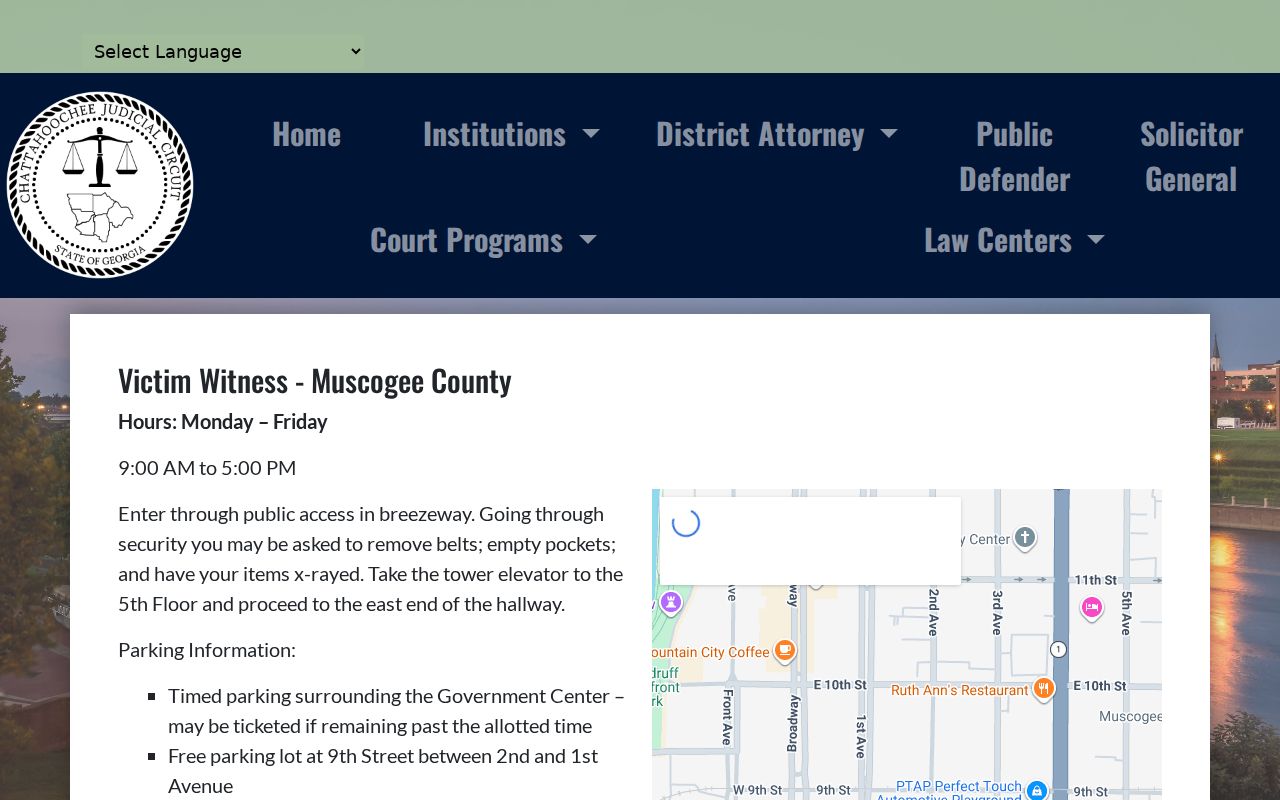
Address variants across official sources make a phone call prudent before any courthouse trip.