
Bench Warrants in Marion County
A bench warrant in Marion County grows out of an existing case, not a new accusation. The classic trigger is a missed hearing. Local traffic material also ties a warrant to unpaid fines after the court date or a failure to appear. What the paperwork calls the order varies. Georgia courts may write "bench warrant," "warrant of arrest," or "capias." A capias is simply a court-issued arrest process, and the clerk on the case can confirm what the label means there. Not every late payment or missed date produces the same order in Marion County, so the triggering event matters as much as the name. Which court holds the file depends on the type of case. Buena Vista Municipal Court keeps the city traffic and non-traffic matters. Marion County Probate and Magistrate Court handles its own traffic and Magistrate cases, while Superior Court records cover felony criminal cases. That division is why a searcher should match the event to the right court before calling anyone.
Marion County Court Route
Begin with the paper or event that created the obligation. That keeps a Marion County bench warrant question in front of the office able to act on it. The sheriff serves criminal warrants, but a court record and a service record answer different questions.
| Possible source | Best first contact | What to ask |
|---|---|---|
| County traffic citation | Probate/Magistrate Court | Citation status, court date, and current resolution process |
| Buena Vista citation | Municipal Court through City Hall | City case status and whether a warrant was issued |
| Superior criminal case | Superior and Juvenile Court clerk | Where the filing is kept |
| Unknown county matter | Marion County Sheriff | Verification method and ID rules |
Georgia offers no public statewide warrant search. GCIC serves criminal-justice agencies, not the public. Marion County also does not appear on the Georgia Courts e-access list.
How a Bench Warrant Is Issued
A judge signs a bench warrant from an existing court matter after a required act goes undone. The order lets law enforcement take the named person into custody and bring the case back before the judge. That path differs from Marion County's private arrest-warrant application, which starts with a police report, a written request, sworn facts, and judicial review of probable cause. Once issued, a Marion County bench warrant stays a court matter until the issuing judge recalls, cancels, or otherwise disposes of it. Paying a vendor proves nothing about recall. A name dropping off an online screen does not prove the court record was cleared. Marion County publishes no recall form, walk-in recall docket, grace period, or local purge schedule. Ask the clerk for the current procedure.
Missed court duty → judge issues order → sheriff or police may serve it → issuing court addresses the case.
Call Before a Marion Warrant Visit
The official Georgia warrant page sends people to the local sheriff. It also warns that offices differ. Some answer warrant questions by phone; others require an in-person request with government identification. Marion County's sheriff page does not say which method applies, so call (229) 649-3841, explain you are asking about your own possible court obligation, and ask what the office needs. Plan ahead, because an in-person warrant check can end in immediate custody. A lawyer can call the issuing court, lay out surrender or appearance options, and advise whether a motion fits. Do not assume the jail is the right first stop. State and association sources list different Geneva Road numbers for the jail and the sheriff, so confirm the location before driving to Marion County.
Caution: Call first and consider legal counsel before appearing in person, because an active Marion County bench warrant may lead to immediate custody.
Bench Warrant vs Arrest Warrant
Both orders can land a person in custody, but they start differently. A Marion County bench warrant grows from a missed duty inside an existing case. An arrest warrant rests on a judge's probable-cause finding about an alleged offense. That distinction shapes which record to request and which court action might resolve it.
| Feature | Bench warrant | Arrest warrant |
|---|---|---|
| Typical trigger | Failure to appear, pay, or comply | Sworn facts supporting probable cause |
| Setting | Existing court matter | Warrant application |
| Public route | Issuing clerk, then sheriff | Magistrate Court or sheriff |
| Resolution focus | Restore case to court | Plan surrender, hearing, and bond |
For more on probable cause and service, see the companion Marion County arrest warrant page.
Marion Bench Warrant Terms
Small wording differences between Marion County courts can change the next step. Ask the clerk to read the exact status rather than treating one label as proof of another.
- Bench warrant
- An arrest order issued by a judge for an unmet court obligation.
- Failure to appear
- A missed required setting that may also be reported to Georgia DDS in traffic cases.
- Capias
- A court-issued arrest process whose exact effect depends on the court record.
- Recall
- A court action withdrawing its warrant. A receipt alone is not proof of recall.
- Quash
- To set aside an order through a court ruling, often after a formal motion.
Marion County publishes no local glossary of status codes. Keep the case or citation number, date of birth, and issuing court handy for a private call, but do not post those details publicly.
How to Resolve a Bench Warrant
Verify first, then confirm with the court at the end. No official Marion source promises an automatic recall after payment, a remote appearance, or a set bond amount. A clerk may explain procedure but cannot give legal advice.
- Identify the issuing court from the citation, notice, or case paper. If it is unknown, call the Marion County Sheriff first.
- Ask the court to confirm the status and current options. For Buena Vista, call (229) 649-7888. For county Probate or Magistrate matters, call (229) 649-5542.
- Consult a lawyer before an in-person visit when custody is possible. Counsel can ask whether appearance, surrender, bond, payment, or a recall motion fits.
- Complete the court’s required step, then ask the clerk to confirm the warrant status in the court record.
If the matter involved traffic FTA, confirm separately that the court sent any required electronic release to DDS. Warrant status and license status are two distinct checks in Marion County.
Marion Warrant Records Requests
Marion County's Open Records Request form is the tool for getting an existing public record. Tell the county who likely holds it. Add a date range and a record category. Ask only for existing, segregable material. General requests go through County Administration, where Heather Wright takes them at marionga@windstream.net. Court files, though, may still belong with the proper clerk. The fee rules sit right on the form. The first 15 minutes of search time cost nothing. Letter or legal copies run 25 cents per page, and staff time, redaction, media, or other allowed costs may apply. Expect prepayment if a request tops $500. Georgia law does not force Marion County to build a new warrant spreadsheet, and pending investigations, protected law-enforcement information, sealed records, and juvenile files can be withheld or redacted. For sheriff contact details, the Georgia Sheriffs' Association directory is the public route.
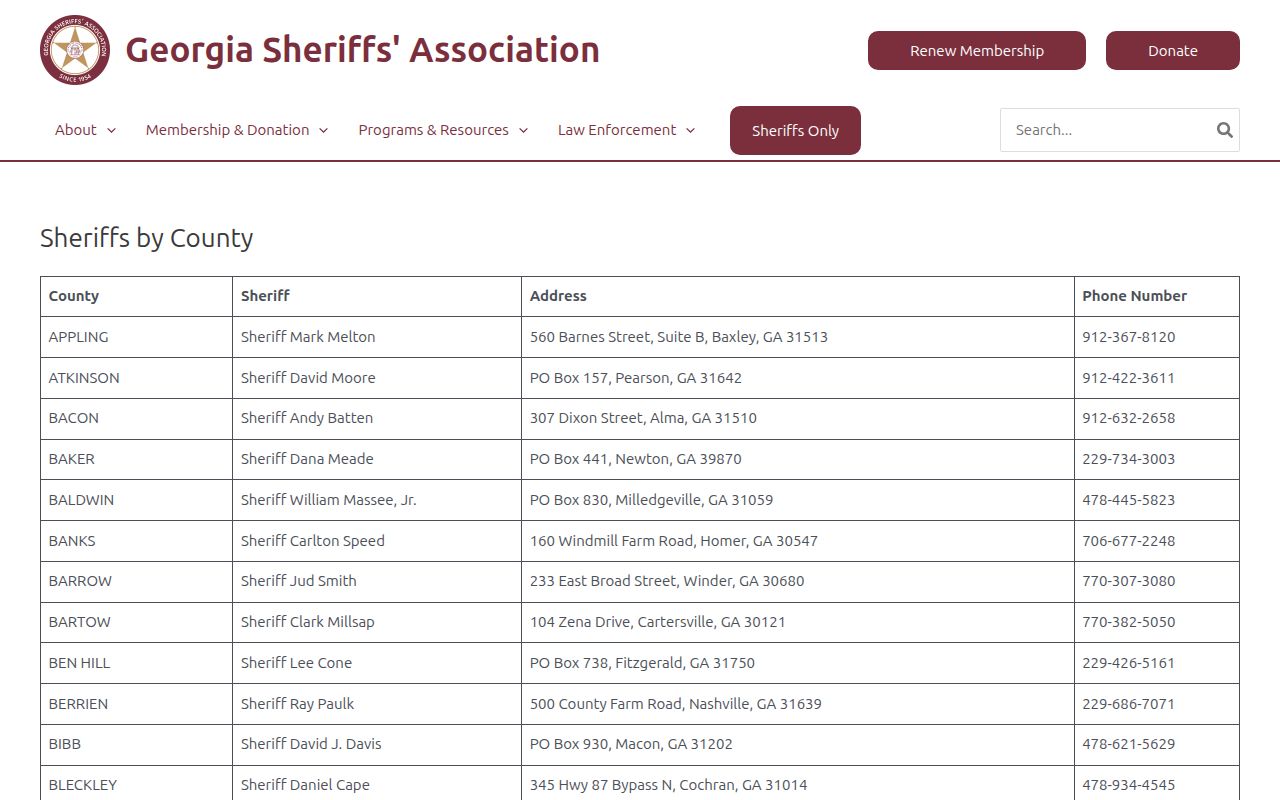
The directory is a contact source, not a public Marion County bench warrant roster.
Which Court Issued It
The judge who signed a warrant controls it. Start with that issuing court. County traffic and Magistrate matters begin at Marion County Probate and Magistrate Court. Buena Vista Municipal Court handles city traffic, non-traffic cases, and municipal warrants. Superior filings sit with Joy Smith, Clerk of Superior and Juvenile Court, at 100 Broad Street. Call her at (229) 649-7321 for a Superior record question. The Marion County Sheriff executes criminal warrants received from courts and other agencies. Recall is still the issuing judge's call. Federal cases land in the Middle District of Georgia's Columbus Division. PACER holds none of the state, Magistrate, Probate, Superior, or local criminal records. Note: Marion County publishes no public bench-warrant list, recall form, amnesty program, or verified walk-in warrant counter.
Marion Traffic FTA Has Two Tracks
A traffic failure to appear in Marion County creates two problems at once. The court side is one. The license side is the other. The issuing court controls its citation and any warrant. Georgia DDS handles the suspension once a court reports an FTA. DDS makes the suspension effective 28 calendar days after it receives notice, and most courts submit releases electronically once the case is resolved. Fix the court obligation first. Then ask whether the court sent the release, following the DDS failure-to-appear instructions. DDS is not a Marion County bench warrant search. A restored license never substitutes for direct confirmation that the court recalled its warrant.